
Comprehensive Mental Health Support for Obsessive-Compulsive Disorder
Obsessive-Compulsive Disorder (OCD) can be a deeply disruptive condition, marked by recurring intrusive thoughts (obsessions) and repetitive behaviors or mental rituals (compulsions) that feel impossible to control. For many individuals, traditional approaches like medication and therapy help. But for others, those options may not bring meaningful relief.
At Olympia TMS, we offer Transcranial Magnetic Stimulation (TMS) — a non-invasive, FDA-cleared treatment option for patients with treatment-resistant OCD who have not achieved sufficient benefit from standard therapies.

What Is Transcranial Magnetic Stimulation for OCD?
TMS uses focused magnetic pulses to stimulate specific regions of the brain involved in obsessive and compulsive thoughts and behaviors. These pulses help modulate neural activity, encouraging more balanced communication within brain circuits linked to OCD symptoms.
Unlike medication, TMS works without systemic drugs. It is also completely non-invasive, making it a well-tolerated option for most patients.
Obsessive-Compulsive Disorder (OCD) can be deeply disruptive. It’s marked by recurring intrusive thoughts (obsessions) and repetitive behaviors or mental rituals (compulsions) that feel impossible to control.
Transcranial Magnetic Stimulation (TMS) is a non-invasive therapy that uses magnetic pulses to stimulate areas of the brain involved in OCD symptoms, helping to reduce obsessive and compulsive thoughts and behaviors.

How TMS Helps OCD
- Targets overactive brain circuits: TMS is designed to influence areas of the brain that research indicates are involved in obsessive-compulsive thinking.
- Non-drug, non-surgical approach: TMS works externally through magnetic fields, with no anesthesia or hospital stay required.
- Evidence of symptom reduction: Studies show that many patients experience a meaningful decrease in OCD symptoms following a course of TMS, especially when other treatments haven’t provided sufficient relief. Research suggests about 45–55% of patients show improvement after treatment.
What to Expect During Treatment
Each TMS session is typically:
- Short and outpatient: Sessions usually last around 20–40 minutes.
- Comfortable and well-tolerated: Patients remain awake and alert.
- Scheduled regularly: A full course often involves daily sessions (e.g., five days per week over several weeks) to build cumulative effects.
There is no downtime. Most patients return to their normal activities immediately afterward.
Treatment Process for OCD
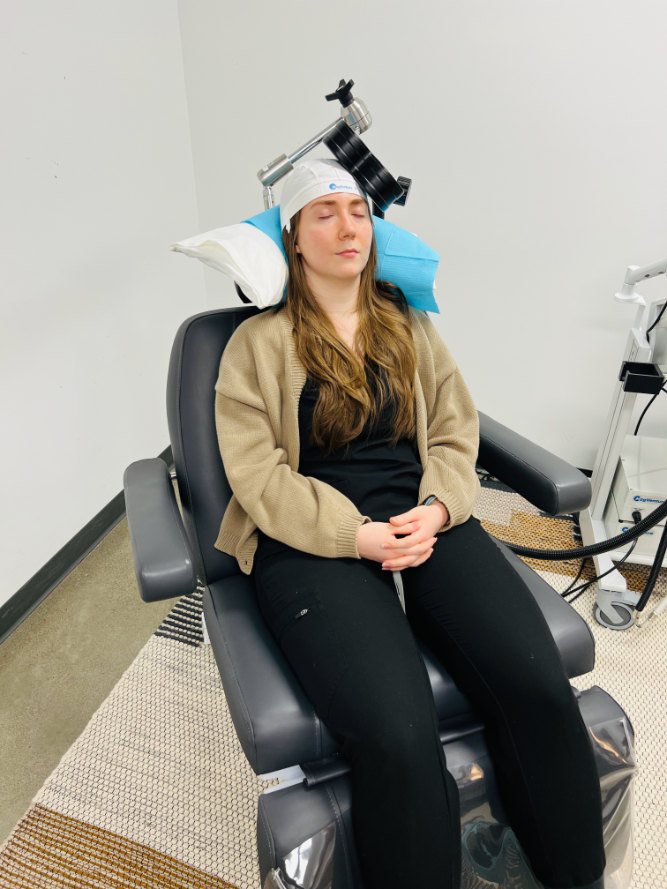
The treatment process is simple and non-invasive. During each session, patients sit comfortably while a magnetic coil delivers painless pulses to targeted areas of the brain. There’s no need for anesthesia, and there’s no downtime. Patients can go straight back to work or their normal activities after each session.
TMS therapy is typically delivered over several weeks, allowing for gradual improvement in symptoms. Each session builds on the last, promoting long-term changes in brain function that lead to relief from OCD symptoms that many report.
Customization of Treatment Plans
No two individuals who suffer from OCD are alike, which is why we customize each treatment plan. Our team takes the time to assess each patient’s specific symptoms and the severity of their condition. This allows us to develop a plan that is tailored to their unique needs.
We adjust the intensity and frequency of sessions based on the patient’s response to treatment. This personalized approach ensures that each individual receives the most effective care possible.

Who May Benefit from TMS for OCD
TMS may be a good option for individuals who:
- Have a confirmed diagnosis of Obsessive-Compulsive Disorder
- Have tried medication and/or therapy but still struggle with persistent symptoms
- Seek a non-invasive alternative with minimal systemic side effects
Your clinician will work with you to assess your symptoms and determine whether TMS is a good fit for your clinical needs.
Patient-Centered Care
At Olympia TMS, treatment is personalized and patient-centered. Every TMS plan is tailored to your specific symptom profile and response pattern, not “one-size-fits-all.”
We combine clinical expertise with the latest research to deliver compassionate, evidence-informed care for OCD and related conditions.
Success Stories and Outcomes
Many of our patients have shared success stories about how TMS has changed their lives. From significant reductions in anxiety and flashbacks to improvements in sleep and mood, TMS offers long-term relief for PTSD sufferers. Patients who complete the course of TMS treatment often report improved relationships, greater emotional stability, and an enhanced quality of life.
The results speak for themselves, with many patients experiencing improvements within just a few weeks of starting TMS therapy.
TMS is FDA Approved
TMS for OCD is FDA-cleared for individuals whose symptoms have not responded adequately to traditional treatments, demonstrating its growing clinical validation.
While individual responses can vary, many patients report significant reductions in obsessive thoughts and compulsive behaviors. This offers improved daily functioning and quality of life.
Frequently Asked Questions about TMS for OCD
What is TMS for OCD?
Transcranial Magnetic Stimulation (TMS) is a non-invasive therapy that uses magnetic pulses to stimulate areas of the brain involved in OCD symptoms, helping to reduce obsessive and compulsive thoughts and behaviors.
How long does a TMS treatment session last?
Each TMS session lasts about 30-40 minutes. Patients typically undergo sessions five times a week for about four to six weeks, depending on individual needs.
Is TMS safe?
Yes, TMS is a safe and well-tolerated treatment. It is FDA-approved and has been extensively researched, showing positive results in many clinical trials. TMS has been studied for decades.
Will I feel any discomfort during TMS sessions?
Some individuals initially find TMS uncomfortable. Dr Penner personally sits with you during your first TMS treatment and will start your session at very low levels. Having personally performed hundreds of initial treatments he has extensive experience in easing those who have initial discomfort to their maximum target.
While many individuals reach their full target by the end of the first treatment session, it is very rare that someone does not reach their full target by the end of the 2nd or 3rd treatment. After that, for those who have initial discomfort the process becomes easier and easier throughout the entire treatment. If you are one of those who has issues with comfort Dr Penner through years of experience has learned numerous techniques to address this. The vast majority of patients have very limited problems reaching their full target. However, Dr Penner will be at your side, and purposefully will start your treatment at extremely low levels.
Can I return to normal activities after a TMS session?
Yes, you can resume your normal daily activities immediately after a TMS session. There is no downtime associated with TMS therapy.
Do I need a referral to start TMS treatment?
In almost all cases, you may schedule a consultation with Dr. Penner directly. There are extremely rare exceptions where your insurance requires a referral to see Dr. Penner for a consultation. Please contact our office if you have questions. If you are a good candidate for TMS, Dr. Penner's team will handle any prior authorization requirements.
Take the Next Step
If obsessive-compulsive symptoms are holding you back, TMS may offer a promising path forward.
To schedule an appointment, please call us at (360) 539-1736 or MESSAGE US.
At Olympia Center for TMS and Psychiatry, we are dedicated to providing the highest-quality care to our patients. We understand the challenges you face, and we are here to support you every step of the way on your journey to mental wellness.